Grammar

Grammar

Since vs Because: What’s the Difference? Explore This Guide

‘Since’ and ‘because’ are two different words that both offer the same kind of explanation, i.e., why something happens. So, people often use them interchangeably. While both terms can be used similarly in many contexts, there is a key detail to note here: ‘Since’ usually introduces a reason that is already obvious or secondary, whereas ‘because’ states a direct reason. Plus, ‘since’ also refers to time-related situations, which further adds to this confusion. But that’s where this blog post will come in handy, as it aims to clarify the confusion of since vs because in the simplest of terms. So, let’s get started. Shall we? Since vs Because — What Is the Real Difference? Both ‘because’ and ‘since’ can introduce a reason for something. However, the purpose and strength of that r...
Grammar

Ms vs Mrs: What’s the Difference & When to Use Each

Choosing between ‘Ms vs Mrs’ when addressing someone in emails, formal documents, or invitations can be surprisingly tricky. This is especially true if you have never written something similar. So, if you find yourself in a similar situation, we’ve got you covered here! In this blog post, we’ll clarify the confusion between ‘Ms.’ and ‘Mrs.’ And for that, we’ll explain the meaning of each word, the difference between them, and how to use them correctly, along with practical examples. So, buckle up because we’re about to clarify this distinction for you. Ms vs Mrs — What’s the Difference? ‘Ms.’ and ‘Mrs.’ are both titles used before a woman’s name. However, they don’t mean the same thing. The major difference between them is based on marital status and the context of use. For ins...
Grammar

Its vs It’s Explained: Simple Rule to Never Confuse Them

Punctuation marks placed mistakenly can silently but significantly weaken an otherwise excellent writing. One such example is the ambiguity between ‘its’ and ‘it’s.’ Even experienced writers often mix up these two words and end up using the wrong variation. So, if you want to resolve this confusion once and for all, this is the place for you. In this blog post, we’ll help you with its vs it’s confusion by discussing the key difference between them. To make sure that you always use the correct version, we’ll share a handy trick. So, without any further ado, let’s get started here! Its vs It’s — Understanding the Key Difference The core difference between ‘it’s’ and ‘its’ is as follows: ‘Its’ shows ‘ownership’ or ‘possession’ of something. ‘It’s’ is a contraction or short ...
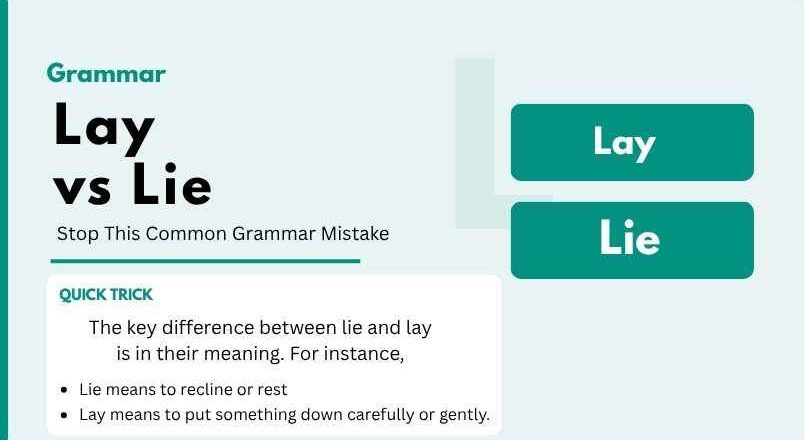
Lay vs Lie Explained: Stop This Common Grammar Mistake
Grammar

Lay vs Lie Explained: Stop This Common Grammar Mistake

Lay and lie may be different forms of the same verb, but they are two completely different words. In fact, they’re so different that using them interchangeably can change the meaning of the whole sentence. So, if you’ve ever paused mid-sentence to think about whether it’s lay or lie, you should read this blog post. It will clarify your confusion about lay vs lie by providing the simplest explanation of their key differences and proper usage. It will even share some useful techniques to help you recall the distinction at all times.  So, with that in mind, let’s dive in here! Lay vs Lie — What Is the Core Difference? The key difference between lie and lay is in their meaning. For instance, Lie means to recline or rest Lay means to put something down carefully...
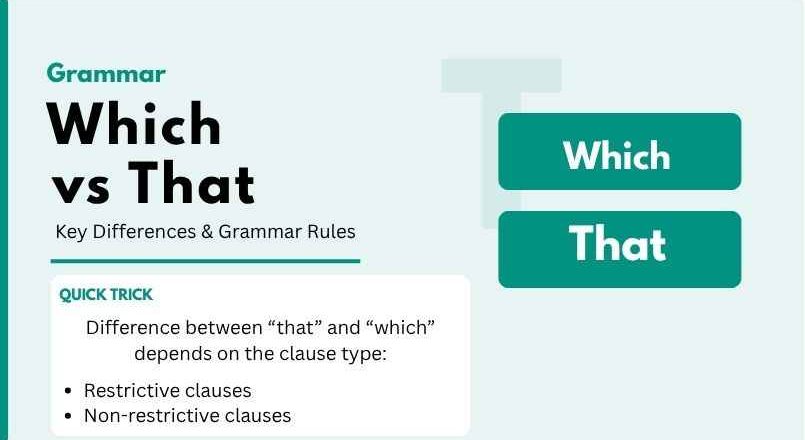
Which vs That: Key Differences & Grammar Rules
Grammar

Which vs That: Key Differences & Grammar Rules

You probably use ‘that’ and ‘which’ on a daily basis—sometimes correctly, but most of the time interchangeably and without realizing it. But here is the problem: While people have been using these two relative pronouns interchangeably, they are not the same. In fact, using the incorrect version might subtly change the meaning of your statement from a grammatical perspective. However, this ends with this blog post, which breaks out the which vs that debate in simple terms. So, let’s begin! What Is the Difference Between ‘Which’ and ‘That’? The major difference between ‘that’ and ‘which’ depends on the type of clause they introduce. For instance, in this debate, there are two types of clauses: Restrictive clauses (essential information) Non-restrictive clause...
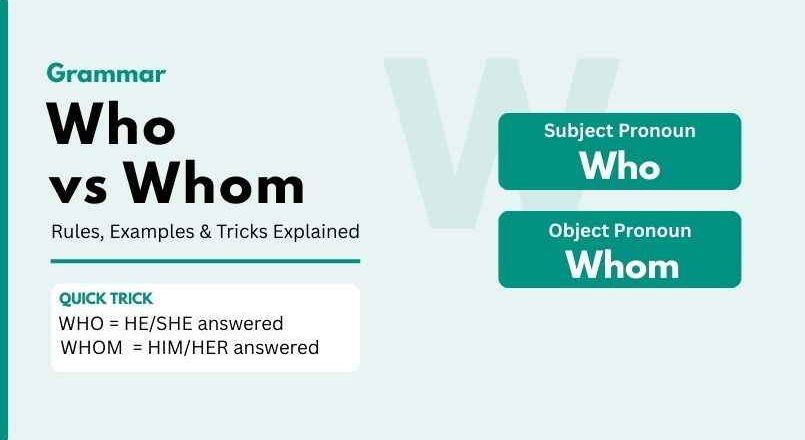
Who vs Whom Explained: Rules, Examples & Tricks
Grammar

Who vs Whom Explained: Rules, Examples & Tricks

Want to sound confident in English? The best way to go about it is to master small grammar differences that others usually avoid. One of them is the usage of who vs whom. When deciding between them, many people rely on instincts—they think that using ‘whom’ feels awkward. However, that’s not the best approach. You can easily master the rule on using ‘whom’ and ‘who’ by understanding the work of the object and subject in both contexts. And that’s where this blog post will help you, as it simplifies the exact difference. Not only that, but here, you will also find some practical memory tricks to help you handle even the trickiest sentences with confidence. So, let’s begin! Who vs Whom — Key Difference Explained Who and whom might seem interchangeable at first, but in reality, ...
18 Most Common Grammatical Errors That Can Ruin Your Writing
Grammar

18 Most Common Grammatical Errors That Can Ruin Your Writing

Imagine spending hours in the research and writing phases, only to submit your content with grammatical mistakes. You would be embarrassed. Right? Well, that’s exactly what editors and writers—even the most experienced ones—often face throughout their professional journeys. The issue here isn’t just the errors themselves—it’s the inability to spot them or tell the difference between right and wrong. That’s where we’ll help you out. In this blog, we’ll highlight the most common grammar mistakes that often confuse writers and can ruin an otherwise great write-up. We’ll explain why each error is incorrect and provide examples to clarify any confusion. So, let’s begin! Grammar Mistakes to Avoid in Your Write-ups 1) Who vs. Whom ‘Who’ serves as the subject, which means it per...