Quick Answer
A 700 words essay is the first length with room for real context before the thesis, built across seven parts and 35 to 42 sentences. It takes about an hour to 100 minutes to write.
Ask most students what separates a 700 words essay from a 600-word one, and they’ll say:
A hundred extra words.
And that answer undersells what actually changes.
In reality, the 700 mark is the first length where you can open with genuine background. Like, you can discuss what’s changed, what’s at stake—that too before you even state your thesis. It is also the first length where a counterargument deserves two moves instead of one:
A concession, then a rebuttal.
Everything else about the essay stays the same—one thesis, three points, and a conclusion that ties it together. And if you miss that distinction, the extra hundred words will just become filler.
So, in this blog post, we’ll break down exactly what 700-word essays are for, how to divide them across the essay, and how to build one from a bare prompt to a finished draft.
The Real Job of a 700 Words Essay
A 700-word essay is a mid-length academic piece that can be of analytical, argumentative, or reflective type. It is built around a single thesis, which has been developed through three supporting paragraphs and tested against a real objection, with enough room up front to explain why the topic is worth arguing about in the first place.
That last piece is the real dividing line.
In a 400- or 500-word essay, there is rarely space to set the scene before the thesis lands. But at 700, there is! And that’s exactly why this length usually opens with a short stretch that explains the following before the argument takes over:
- What’s currently happening
- What’s shifted
or
- Why the question is relevant now
Other than this addition, the underlying task hasn’t moved:
- One argument, not several
- Three points that each earn their paragraph
- One objection, answered with reasoning instead of dismissed
The hundred words you get compared to a 600 word essay aren’t there for a fourth point. They are there so:
- The reader isn’t dropped into your argument without knowing why it matters
and
- Your response to pushback sounds considered instead of rushed
What This Length Is Actually Testing
A 700 words essay usually appears when an instructor wants to see whether a student can hold an argument together across several parts at once by framing, supporting, and defending it without extending the whole thing.
So, at this length, a student is typically being evaluated on whether they can:
- Set up an argument with context rather than diving straight into the thesis
- Keep three points genuinely separate instead of overlapping
- Meet an objection with reasoning, rather than a token mention
The habits this builds show up later in:
- Extended college application essays
- Case-study responses
- Proposal and grant writing
So, any workplace document where you have to frame a problem, make your case, and hold up under a challenge to it will require the skill sets you may have gained while writing a 700 words essay.
How the 700 Words Get Spent
Here is a bird’s-eye view of how to distribute your words in each section of the 700 words essay:
| Part of the Essay | Words to Budget | Job It Has to Do |
| Opening | 70–80 Words | States the topic and closes on a thesis that hints a fuller argument is coming |
| Framing Paragraph | 60–70 Words | Explains what’s changed or what’s at stake, so the reader understands why the thesis matters before you defend it |
| Body Paragraph 1 | 110–120 Words | First point, backed by an example and an explanation of how that example actually produces the effect |
| Body Paragraph 2 | 110–120 Words | A separate point, built the same way |
| Body Paragraph 3 | 90–100 Words | Your strongest remaining point |
| Pushback and Response | 100-110 Words | Names the toughest objection, grants what’s fair about it, then explains why the thesis still holds |
| Conclusion | 70–80 Words | Draws the points and the response together into one final idea |
That framing paragraph right after the opening is the piece shorter pieces like 300 words essays can’t afford. And if you skip it here, the essay will read like it’s arguing with no stakes attached—the whole thing will feel correct, but disconnected from why anyone should care.
Building the Draft for a 700 Words Essay, Piece by Piece
1) Figure Out What Kind of Case You’re Building
Before writing a line, work through:
- What’s the actual task—Is it to analyze, argue, compare, reflect?
- Does the prompt assume the reader already has context, or do I need to supply it?
- Is there an objection baked into the question itself?
- What separates a complete answer here from a merely long one?
Most drafts at this length go wrong before the first paragraph exists—not from clumsy writing, but from solving a narrower or broader problem than the prompt actually poses.
2) Settle on Three Points That Can Take a Hit
Three is the limit here in a 700 words essay, not a floor. A fourth point almost always means one of the other three gets shortchanged.
Sounds confusing?
Let’s use an example to understand this!
Take this prompt as an example:
“Discuss whether social media does more harm than good for teenagers.”
Now, an unfocused answer to it would try to cover everything like this:
Here, we’ve made five claims, but we haven’t developed any of them.
But a tighter version of this would narrow down the claims to one and explain it fully.
Here’s how:
So, before moving on, simply ask yourself:
Can I support three points like that, each with its own explanation, inside 700 words?
If yes, then move to the outline. Otherwise, you’ve picked a broad angle. So, in such a situation, drop the weakest of the three and either fold its idea into one of the other two, or replace it with a narrower version of the same point—something like a specific consequence of it, rather than a fourth separate idea.
3) Rough Out the Sequence First
A working outline at the length of 700 words would look something like this:
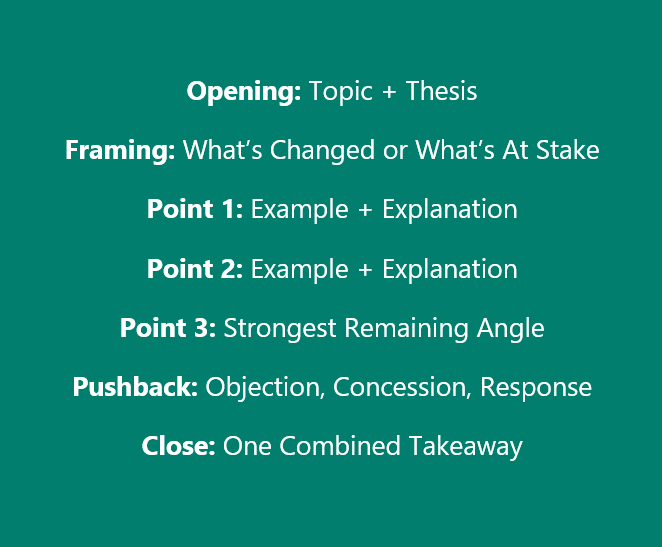
However, this phase is supposed to be a sequencing exercise. So, don’t start writing full sentences here.
4) State the Thesis, Then Justify Why It’s Worth Making
The opening section of a 700 words essay is supposed to land the thesis in roughly 70–80 words. What follows is the framing paragraph, where you explain the stakes.
Here is a practical example of how to do that:
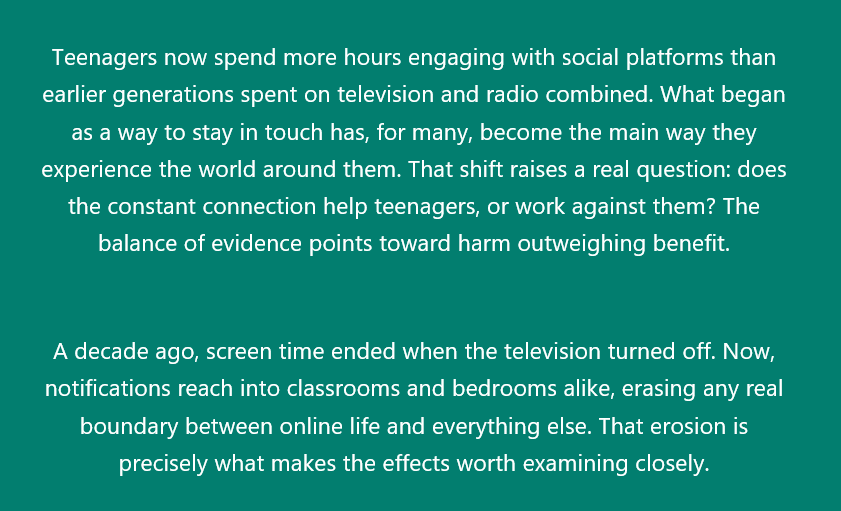
As you may have noticed, our framing paragraph isn’t a second version of the thesis; it is actually the reason the thesis needed making in the first place.
5) Push Each Point Past the Example and Into the Mechanism
Run each of your three paragraphs through this shape:
Opening Sentence → What It Means → An Example → Why the Example Produces That Effect → Back to the Thesis
The fourth piece—explaining the mechanism behind the example—is what this length has room for that a shorter one doesn’t. However, here, naming an instance isn’t enough; you actually need to show the reader how it leads where you say it leads.
6) Meet the Objection in Two Moves
Most drafts, especially the ones related to shorter essays, such as 300 or 400 word essays, shrink the ‘meeting of the objection’ into a single sentence, which eventually waves the objection away. But in a 700 words essay, that same approach would feel like a missed opportunity. And this is the part that tends to separate a solid essay from a genuinely convincing one.
So, name the strongest counterpoint. Grant whatever is legitimate in it. Only then explain why your thesis survives it.
Here is an example that will practically show you the implementation of all of this:
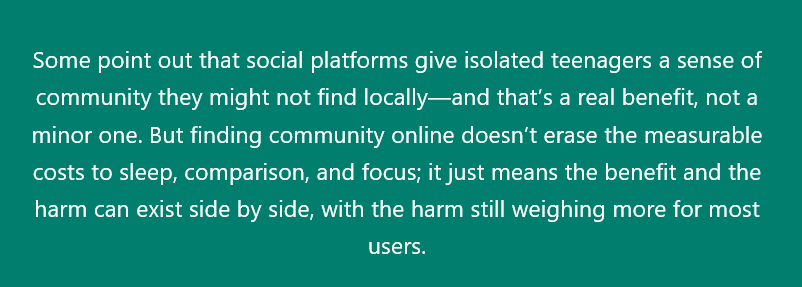
The concession must come before the response, or the response will read as defensive rather than reasoned.
7) Bring the Points Back Together in the Final Lines
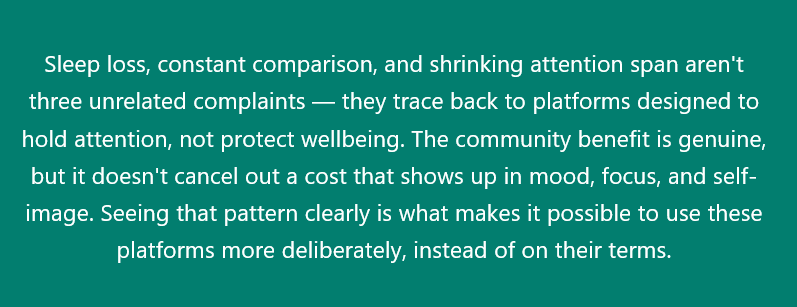
The closing of a 700 words essay should show how the three points and the response to pushback fit into a single idea.
The following example practically showcases the implementation of this point:
8) Hold the Final Draft Up to the Plan
Once the draft exists, go back through it against the plan itself:
- Does the framing paragraph explain stakes, or does it just restate the thesis?
- Does each body paragraph explain why its example works, not just describe it?
- Does the pushback section concede something real before it responds?
- Does the total sit near 630–770 words?
- Do the transitions between sections actually connect, or just sit next to each other?
That last question catches more problems than a straight grammar pass does. How?
Well, a paragraph can be flawless on its own and still fail to follow from the one before it. So, make sure that you don’t skip it!
Where These Drafts Tend to Break
| What Goes Wrong | What to Do Instead |
| Framing paragraph turns into a rehash of the intro | Use it to explain what’s changed or at stake, not to restate the thesis |
| Body paragraphs stop at the example | Add the explanation of why that example leads to the claimed effect |
| The objection gets named and dismissed in one breath | Concede the fair part first, then respond |
| A fourth point sneaks in because there’s space | Hold the line at three and develop each fully |
| The close lists all three points again | Combine them into a single connected idea instead |
| Drafting starts without an outline | Map the sequence first—more space makes drifting more likely, not less |
Questions That Come Up Around the 700 Words Essays’ Length
Does it matter if the final count drifts from 700?
Only if a hard limit was stated. Otherwise, landing anywhere from about 630 to 770 words is well within normal range.
How is the 700 words essay usually divided?
Seven parts in practice:
- The opening
- A framing paragraph
- Three body paragraphs
- A pushback-and-response section
- A closing section
Roughly how many sentences does a 700-word essay come out to?
No fixed count, but most drafts settle somewhere between 35 and 42 sentences, depending on how long individual sentences run.
Realistically, how much time does a 700 words essay take?
Once the topic and outline are settled, most writers land somewhere between an hour and 100 minutes, editing pass included.
What does 700 words look like on a page?
About a page and a half if single-spaced, closer to two and a half pages double-spaced—font size and margins shift this a bit.
What It Comes Down To — Concluding Remarks
A 700 words essay isn’t a 600-word essay with extra padding tacked on. It’s the length where an argument gets to open with real context, develop three points through explanation rather than mention, and answer its strongest objection with an actual concession before the rebuttal.
Therefore, set the stakes before you argue, hold to three points you can fully back, and give pushback a fair hearing before you counter it. And most importantly, close by connecting the pieces instead of repeating them.
If you handle a 700-words essay that way, the extra hundred words would stop feeling like a burden to fill and start being the room the argument actually needed.

WordlyCove is a peaceful space where words, writing, and knowledge come together, an ideal platform for writers and learners.
