Author: Wordly Cove

WordlyCove is a peaceful space where words, writing, and knowledge come together, an ideal platform for writers and learners.
Fewer vs. Less: The Simple Rule Most Writers Get Wrong
Grammar

Fewer vs. Less: The Simple Rule Most Writers Get Wrong

In everyday conversations, you may hear phrases like ‘10 items or less,’ ‘less mistakes,’ or ‘less people.’ But what if we tell you that such expressions are not always grammatically correct? Yes, you’ve read this right! People get confused about such expressions and end up using ‘fewer’ and ‘less’ interchangeably because they don’t know whether the noun can be counted or not. So, in this blog post, we’ve decided to help you understand this distinction by breaking down the difference between fewer vs. less. We’ll start by explaining each word, and as we move along, we’ll discuss when to use each through practical examples. So, let’s begin! Fewer vs. Less — What Exactly Is the Real Difference? The core difference between fewer and less depends on the type of noun they describ...

How to Write a Thesis
Research, How To

How to Write a Thesis

A thesis isn’t a long essay you can figure out as you go. It is a sustained, original, evidence-based piece of academic work and without a structured process behind it, months can disappear without anything meaningful to show for them. The students who finish strong aren’t necessarily the smartest ones in the program. They’re the ones who treated a thesis as a process, not an event. So, this blog post will walk you through every step of that process—and that too with real examples throughout. Then, without further ado, let’s dig in! Step 1: Understand What a Thesis Actually Is A thesis is an extended piece of original academic writing in which you investigate a specific research question, build an argument from evidence, and contribute something new to your field. That w...
Abbreviation for Pharmaceutical with Meaning and Correct Usage
Abbreviations

Abbreviation for Pharmaceutical with Meaning and Correct Usage

Full Form: PharmaceuticalAbbreviations: Pharm., Pharmaceut., & Pharma.Meaning: Related to the preparation, production, distribution, or use of medicinal drugs and healthcare products. Defining Pharmaceutical with Usage Examples The term “pharmaceutical” refers to medicines, drug development, and the industry involved in creating and supplying medical treatments. It is commonly associated with healthcare companies, pharmacies, research laboratories, and medical sciences. Examples: The pharmaceutical industry invests heavily in medical research. She works for a leading pharmaceutical company. Pharmaceutical products must pass strict safety regulations. Advances in pharmaceutical science have improved patient care. The university offers courses in pharmaceutical s...
Abbreviation for Mister with Meaning and Correct Usage
Abbreviations

Abbreviation for Mister with Meaning and Correct Usage

Full Form: MisterAbbreviation: Mr.Meaning: A respectful title used before the name or surname of a man. Defining Mister with Usage Examples “Mister” is an honorific title commonly used to address or refer to an adult male in formal and everyday communication. It is placed before a person’s name to show politeness, professionalism, or respect. Examples: Mister Johnson will attend the meeting tomorrow. I spoke with Mister Ahmed regarding the project details. The invitation was addressed to Mister Clark. Mister Wilson thanked everyone for their support. Please ask Mister Lee to contact the office. Correct Usage of Mister Abbreviation The abbreviation “Mr.” is the standard shortened form of “Mister” and is widely used in formal writing, official documents, busin...
Abbreviation For Example with Meaning and Correct Usage
Abbreviations

Abbreviation For Example with Meaning and Correct Usage

Full Form: ExampleAbbreviation: Ex., Examp., & Eg.Meaning: Something used to illustrate, explain, or represent a concept, idea, or situation. Defining Example with Usage Examples An example is a specific instance or illustration used to make an idea easier to understand. It helps clarify meanings, support explanations, and provide practical understanding in communication or learning. Examples: The teacher gave an example to explain the grammar rule. This painting is a good example of modern art. She used real-life examples during her presentation. The book contains several examples of creative writing. His behavior set a positive example for others. Correct Usage of Example Abbreviation The abbreviations “Ex.”, “Examp.”, and “e.g.” are commonly associate...
Types of Research (With Definitions and Examples)
Research

Types of Research (With Definitions and Examples)

Not all research serves the same purpose—some studies are designed to analyze existing information, while others aim to explore new ideas, solve practical problems, or test theories. But despite that, many academicians, professionals, and students struggle to identify which research approach fits their objectives. As a result, choosing the wrong type of research leads them to inaccurate findings, wasted resources, and conclusions that fail to answer the original question.  For this reason, it is essential to understand the different types of research first. And that’s where we will help you out. In this blog post, we’ll break down the major types of research, explain what each one means, and provide practical examples to help you determine when and how they are used. So, with...
How to Write a Research Paper
Research, How To

How to Write a Research Paper

Most students sit down to write a research paper with a topic in mind and a blank document in front of them. And that is exactly where things go wrong. Without a process, research papers turn into a mess of loosely connected information, vague arguments, and last-minute panic. In fact, such an approach results in a paper that reads like a summary of everything you found rather than an original, well-argued piece of academic work. But here is the thing: Writing a research paper is not a talent; it is a process. And once you understand that, the whole thing becomes far less intimidating. So, in this blog post, we will walk through every single step—from choosing your topic to submitting a polished final draft with real examples throughout. Now, let’s get into it. Step 1: Un...
Abbreviation for Department with Meaning and Correct Usage
Abbreviations

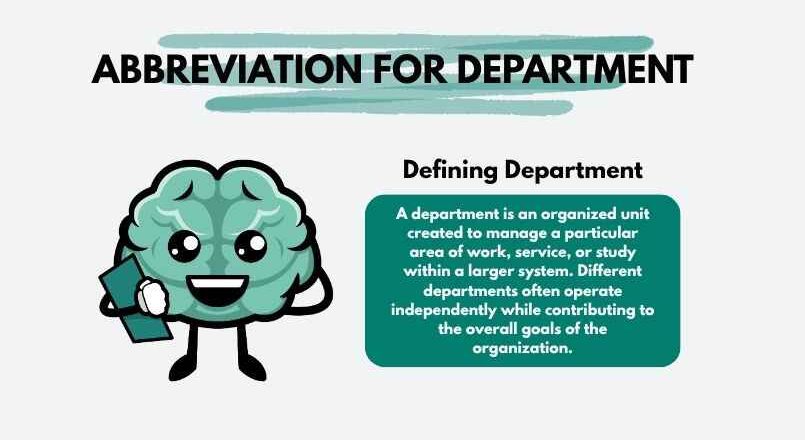
Abbreviation for Department with Meaning and Correct Usage

Full Form: DepartmentAbbreviations: Dept. & Dep't.Meaning: A specialized division within an organization, institution, company, or government that handles specific functions or responsibilities. Defining Department with Usage Examples A department is an organized unit created to manage a particular area of work, service, or study within a larger system. Different departments often operate independently while contributing to the overall goals of the organization. Examples: The marketing department launched a new advertising campaign. She works in the human resources department of the company. The police department responded quickly to the emergency call. Our department is responsible for customer support services. The finance department approved the annual budge...
What Is Academic Integrity, and Why Is It Important?
Plagiarism, Writing

What Is Academic Integrity, and Why Is It Important?

Never before has it been easier to complete an assignment without truly doing the work. Right? For instance, with endless online resources, essay mills, and AI tools available at the click of a button, the line between getting help and crossing ethical boundaries has become increasingly blurred. As a result, many students find themselves unsure of what is acceptable, what isn’t, and why educational institutions place such a strong emphasis on honesty in academic work. The answer to such confusion lies in understanding academic integrity. But what does that even mean? In this blog post, we’ll explore the answer to this question in great detail. Not only that, but we’ll also learn why academic integrity matters in today’s learning environment, and how it can shape far more than j...
How to Write a Conclusion
How To, Writing

How to Write a Conclusion

Your conclusion decides whether your content will be ignored or remembered—not the introduction, and not even the main body. But why? Well, no matter how strong your ideas are, if your ending doesn’t bring them together with clarity and intent, your writing feels unfinished. And honestly, that’s where most write-ups quietly fail. But you don’t need to worry about that because in this blog post, we’ll help you craft endings that perfectly do their jobs! To be precise, here, we’ll teach you how to write a conclusion that keeps your readers engaged until the last line, reinforces your message, and leaves them with something clear to take away. So, with that in mind,  let’s dig in! What a Strong Conclusion Actually Does As we’ve briefly discussed in the introduction, ...