
Writing a research proposal can feel intimidating because you’re expected to present a complete plan for a study that hasn’t happened yet. So, you need to explain:
- What do you want to investigate?
- Why your topic matters.
- How you’ll conduct the research.
and
- What outcomes do you expect to achieve?
But the challenge is that many students understand their topic, yet they struggle to organize their ideas into a convincing proposal. So, if you are one of them, then stick around here till the end.
Why?
Well, simply because, in this blog post, we’ll walk you through each section of a research proposal and show practical examples so you can start drafting your own proposal immediately. Then, let’s get started!
What Is a Research Proposal?
A research proposal is a document that outlines your planned study. It explains the research problem, objectives, methodology, and expected contribution of the project. So, it’s sort of like a blueprint for your research.
But what exactly does a strong research proposal do?
Well, a strong research proposal helps professors, supervisors, or funding organizations determine whether your study is valuable, feasible, and worth supporting.
How to Write a Research Proposal in 9 Steps
Now that you have a basic understanding of what a research proposal is and what it does, let’s move to our main goal here—how to write one!
Well, to make the process of writing a research proposal easier to understand, we’ll use a step-by-step approach here. Plus, we’ll use the following topic throughout this guide as a reference to show you the practical example of every theoretical bit that we discuss here:
“The Impact of Social Media Usage on Academic Performance Among University Students”
1) Create a Clear and Specific Title
Your title should tell readers exactly what your research is about. So, make it clear and specific.
This means that you should totally avoid vague titles because they make it difficult for readers to understand the focus of your study.
But how exactly does a clear and specific title actually look like?
Well, here is a strong and weak title example to help you clarify the difference between the two:
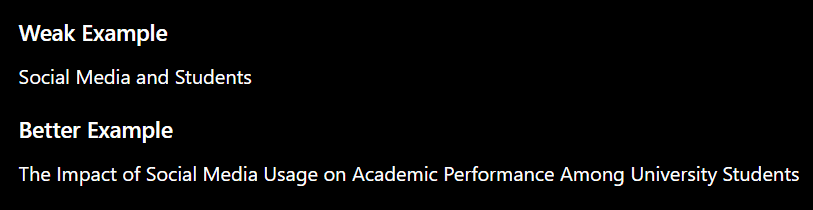
As you can see, the second title identifies the main topic (social media usage), the outcome being studied (academic performance), and the target population (university students). And that’s the sweet spot here.
So, here is a quick formula that you can always use to get the right title:
[Main Variable] + [Effect/Relationship] + [Target Population]
And based on this formula, the following is a perfect title:

2) Write the Introduction and Background
The introduction provides context for your topic and explains why the research matters. So, write it!
However, while doing so, a common mistake is starting too broadly and spending several paragraphs discussing unrelated information.
Instead, what you should do is move quickly from the general topic to the specific problem you want to investigate. And based on this, here is an example introduction for the same reference topic:
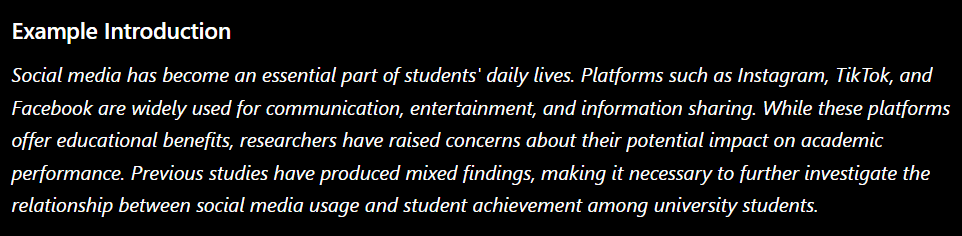
As you can see, this paragraph:
- Introduces the topic
- Explains its relevance
- Mentions existing research
- Leads naturally to the research problem
That’s why it works!
3) Define the Research Problem
The research problem explains the specific issue your study aims to address. So, define it, as doing so will help readers immediately understand what challenge or gap your research intends to solve.
But how can you define it properly?
Well, here are weak and strong examples to help you clearly understand the difference between the right and wrong approach:
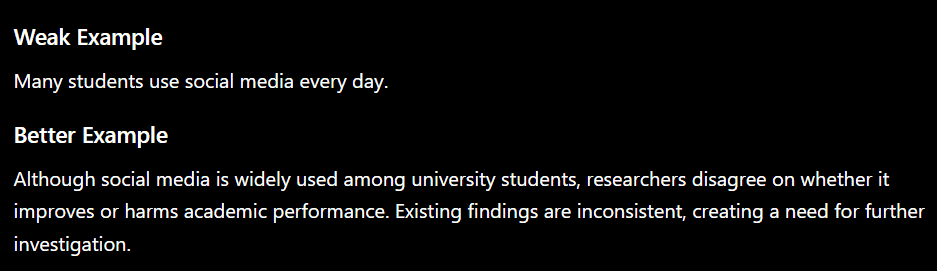
The second example is better because it identifies the following:
- The issue
- The gap in knowledge
- The reason for conducting the study
So, that’s exactly how you should define your research problem.
4) Develop Research Questions and Objectives
Research questions guide your study, while objectives explain what you hope to achieve. Together, they establish the direction of your research and help make sure that every part of the study serves a clear purpose. So, develop them!
But while doing so, make sure they directly connect to the research problem. That’s because, if they don’t, your proposal may lack focus and consistency.
Well, here are some sample research questions and objectives to help you better understand what they look like:
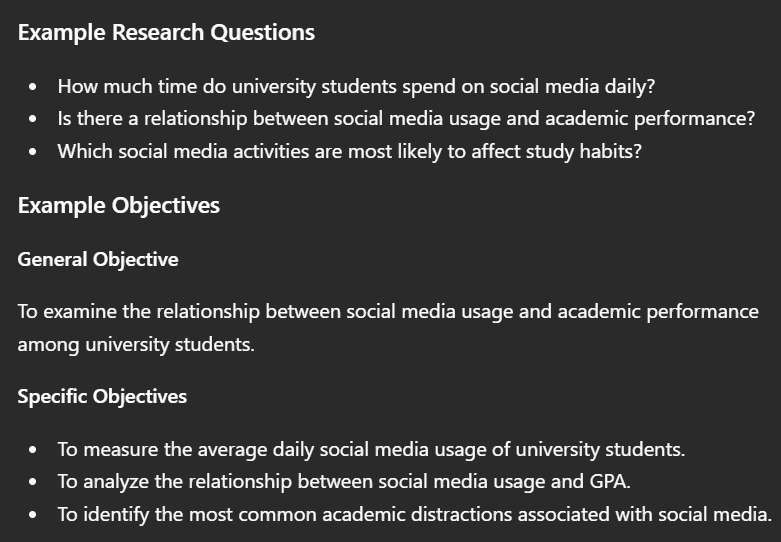
As you can see in the above example, each objective supports answering one or more research questions. And this alignment creates a logical structure for the study. So, that’s what you should do here as well!
5) Conduct a Literature Review
The literature review demonstrates that you understand existing research and helps justify why your study is necessary. So, instead of summarizing every source you find, here, you should focus on identifying:
- Important findings
- Recurring themes
- Limitations
and
- Research gaps
But why?
Well, the goal here is to show how previous studies lead to the need for your own research. And here is an example to better understand all of this:
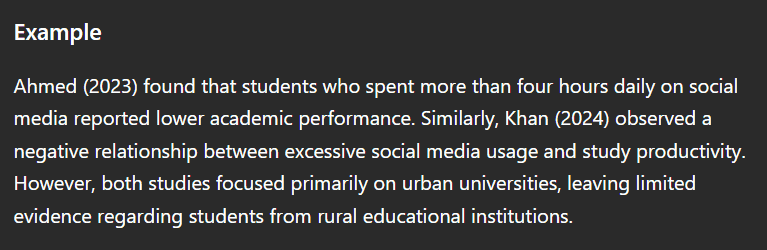
As you can clearly see, this paragraph summarizes previous findings while identifying a limitation in existing research. So, if you follow this approach, it will create a clear justification for conducting a new study.
6) Explain Your Research Methodology
The methodology section explains how you plan to conduct the research. Therefore, reviewers often pay close attention to this section because it determines whether the study is practical and capable of producing reliable results.
And that’s why you should be transparent about your research design, participants, data collection methods, and analysis techniques here.
Here is an example to help you understand how you can do that:
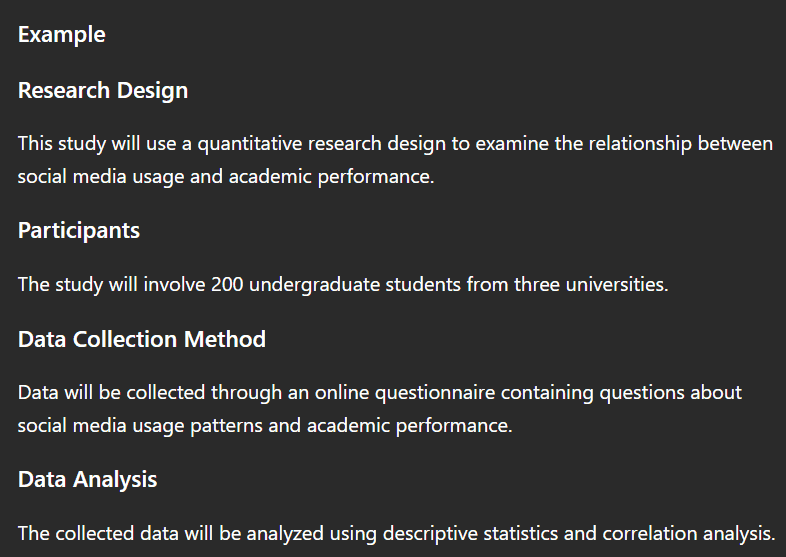
As you can see, the methodology clearly explains:
- Who will participate
- How information will be collected
and
- How the results will be analyzed
And this will help readers assess the feasibility of the research.
7) Describe Expected Outcomes
The expected outcomes section explains what insights your research is likely to generate. So, while describing them, you should focus on realistic expectations rather than attempting to predict exact results.
But how can you do that?
Well, you can explain how the findings may contribute to academic knowledge, professional practice, or future research.
Here is an example to help you guide better:
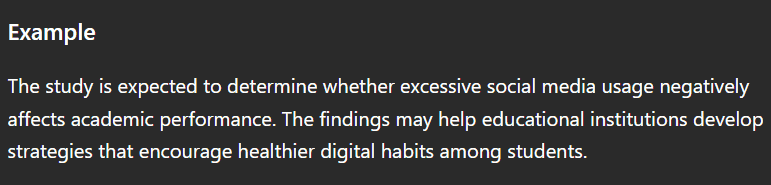
This example discusses potential contributions without presenting conclusions that have not yet been supported by evidence. So, that’s the perfect sweet spot here!
8) Create a Realistic Timeline
A timeline demonstrates that your project can be completed within the available timeframe. So, break the study into smaller stages and assign realistic deadlines to each one.
But why?
Well, simply due to the fact that overly ambitious schedules may raise concerns about the feasibility of the research.
So, in light of that, here is an example of a timeline:

As you can see, this timeline divides the project into manageable phases and provides a realistic schedule for completion. So, that’s how you should lay out a realistic timeline as well.
9) Add References
The references section lists all sources used in your research proposal. So, use the citation style required by your institution and make sure that every in-text citation has a corresponding reference entry.
But why?
Well, simply because proper referencing strengthens credibility and helps avoid plagiarism. So, here is an example of a sample APA reference to help you guide better on that particular citation style:

As is obvious, this citation style contains all the information required for readers to locate the original source. So, regardless of the citation style that you use, this is how you should add references.
Common Mistakes to Avoid When Writing a Research Proposal
Even a strong research idea can be weakened by avoidable mistakes. So, make sure to avoid the following blunders while writing a research proposal:
Choosing a Topic That Is Too Broad
Too Broad Example: “Social Media and Education”
More Focused Example: “The Impact of Social Media Usage on Academic Performance Among University Students”
Writing Vague Objectives
Weak Objective Example: “To study social media.”
Strong Objective Example: “To examine the relationship between daily social media usage and GPA among university students.”
Ignoring the Research Gap
Your proposal should explain why the study is necessary, not simply describe a topic.
Using an Unrealistic Methodology
Choose methods that can realistically be completed with the time, resources, and participants available to you.
Research Proposal Checklist
Before submitting your proposal, make sure it includes:
- Title
- Introduction and Background
- Research Problem
- Research Questions or Hypotheses
- Research Objectives
- Literature Review
- Methodology
- Expected Outcomes
- Timeline
- Budget (if required)
- References
Final Thoughts
To sum up, writing a research proposal becomes much easier when you approach it one section at a time. So, start with a focused topic, define a clear research problem, develop research questions and objectives that align with that problem, and choose a methodology that supports your goals. Most importantly, remember that a research proposal is not just a collection of academic requirements. It is your opportunity to demonstrate that your study is important, practical, and capable of generating meaningful insights. And when every section works together to support that argument, your proposal becomes far more convincing to supervisors, reviewers, and funding organizations.

WordlyCove is a peaceful space where words, writing, and knowledge come together, an ideal platform for writers and learners.
