Choosing between ‘Ms vs Mrs’ when addressing someone in emails, formal documents, or invitations can be surprisingly tricky. This is especially true if you have never written something similar.
So, if you find yourself in a similar situation, we’ve got you covered here!
In this blog post, we’ll clarify the confusion between ‘Ms.’ and ‘Mrs.’ And for that, we’ll explain the meaning of each word, the difference between them, and how to use them correctly, along with practical examples. So, buckle up because we’re about to clarify this distinction for you.
Ms vs Mrs — What’s the Difference?
‘Ms.’ and ‘Mrs.’ are both titles used before a woman’s name. However, they don’t mean the same thing. The major difference between them is based on marital status and the context of use. For instance,
- The word ‘Mrs.’ is traditionally used for a married woman.

- However, ‘Ms.’ is a neutral title used for a woman, regardless of her marital status.
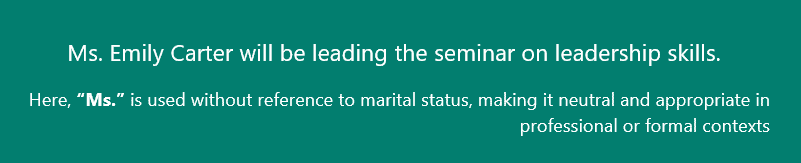
In the context of modern communication, ‘Ms.’ has become the safer and more widely preferred option. This is especially true in formal settings and workplace situations where someone’s marital status may be irrelevant or unknown.
What Is the Meaning of Ms?
As we’ve mentioned earlier, the term ‘Ms.’ is a title used before a woman’s surname that does not indicate marital status. This word aims to address women without referencing whether they are married, and it became popular in the 20th century.
Here are some of its examples to understand its meaning better:
Dear Ms. Emily, thank you for your application.
Ms. Catherine will lead the meeting tomorrow.
Please welcome Ms. Carter to the conference.
As you can see, the implementation of ‘Ms.’ is similar to how ‘Mr.’ is used for men regardless of their marital status.
What Does Mrs Stand For?
‘Mrs.’ is a traditional title used for a married woman. Historically, people used it alongside the husband’s surname and sometimes, even the husband’s full name. Here is how:
Mrs John Smith
Mrs Smith
However, its usage is still quite common these days, especially in formal, social, or traditional contexts. These are a few examples that highlight the practical usage of ‘Mrs.’ in different situations:
Dear Mrs. Williams, your order has been confirmed.
Mrs. Thompson will host the charity event.
Please congratulate Mrs. Khan on her achievement.
But even though ‘Mrs.’ has remained common, it’s best to use it when you are certain of someone’s marital status or preferences.
How to Choose Between Ms & Mrs — An Easy Way to Remember the Difference
Even when people know the difference and meaning of Ms vs Mrs, many people still find their usage confusing. So, if you’re one of them, you can clear up the confusion by following a few practical guidelines.
For instance, you can use ‘Ms.’ in the following situation
- If you are writing formal documents or professional emails
- If you don’t know the woman’s marital status
- When marital status is irrelevant to the situation
- When the woman (you’re referring to) prefers a neutral title
But you can use ‘Mrs.’ in these circumstances:
- If you are writing formal social invitations
- When the woman (you’re referring to) specifically prefers being addressed as ‘Mrs.’
- When you specifically know the woman is married
If you’re still in doubt, simply go with ‘Ms.’ because it is widely accepted and respectful. Plus, it avoids making assumptions about someone’s personal life.
Practical Examples of Ms and Mrs
To further clarify the difference between Ms. and Mrs., consider the following examples, which highlight the usage of each term in various settings.
| Situation | Correct Example |
| Business meeting | Ms. Garcia will present the quarterly report. |
| Community event | Mrs. Wilson is organizing the charity fundraiser. |
| Formal invitation | Mr. and Mrs. Anderson request your presence at their wedding. |
| Professional email | Dear Ms. Patel, thank you for contacting us. |
| School communication | Mrs. Brown teaches the 5th-grade class. |
| Workplace introduction | Please welcome Ms. Taylor to the marketing team. |
FAQs About Ms vs Mrs
Is Ms. for a girl or a boy?
‘Ms.’ is used for a girl or a woman, not for a boy. It is a neutral title that doesn’t indicate whether a woman is married or unmarried.
Is Ms. used for divorce?
Yes, ‘Ms.’ can be used by a divorced woman because it does not indicate marital status. In fact, for this exact reason, many women prefer ‘Ms.’ after divorce.
Is it Ms. or Mrs. for my wife?
Traditionally, ‘Mrs.’ is for a married woman, including your wife. However, some women prefer ‘Ms.’ as well. So, it depends on personal preference.
Is it rude to call someone Ms instead of Mrs?
Absolutely not. In fact, in most situations, ‘Ms.’ is considered neutral and respectful.
Is Ms. used for a married woman?
‘Ms.’ can be used for both married and unmarried women, which is why it is often a preferable choice in professional communication.
Should I use Mrs. or Ms?
You should use ‘Ms.’ when you don’t know the marital status of a woman or when you want a neutral, professional option. However, if the woman is married and prefers that title, you can use ‘Mrs.’
What is the difference between Ms., Mrs., and Miss?
- ‘Ms.’ is appropriate for a neutral title, where marital status is not specified.
- ‘Mrs.’ is useful for a married woman.
- ‘Miss’ is a conventional choice for an unmarried woman.
Conclusion
In simple terms, ‘Ms’ is a neutral title that doesn’t indicate marital status, whereas ‘Mrs.’ is traditionally used for a married woman. However, since marital status isn’t always known—or relevant— ’Ms.’ has become the preferred choice in many formal and professional situations. So, if you don’t know which title to use from Ms vs Mrs, choosing ‘Ms.’ is usually the most reliable option.

WordlyCove is a peaceful space where words, writing, and knowledge come together, an ideal platform for writers and learners.
